Iran Offers Seven-Day Plan to Reopen Hormuz Strait; Report Says Trump Rejected It
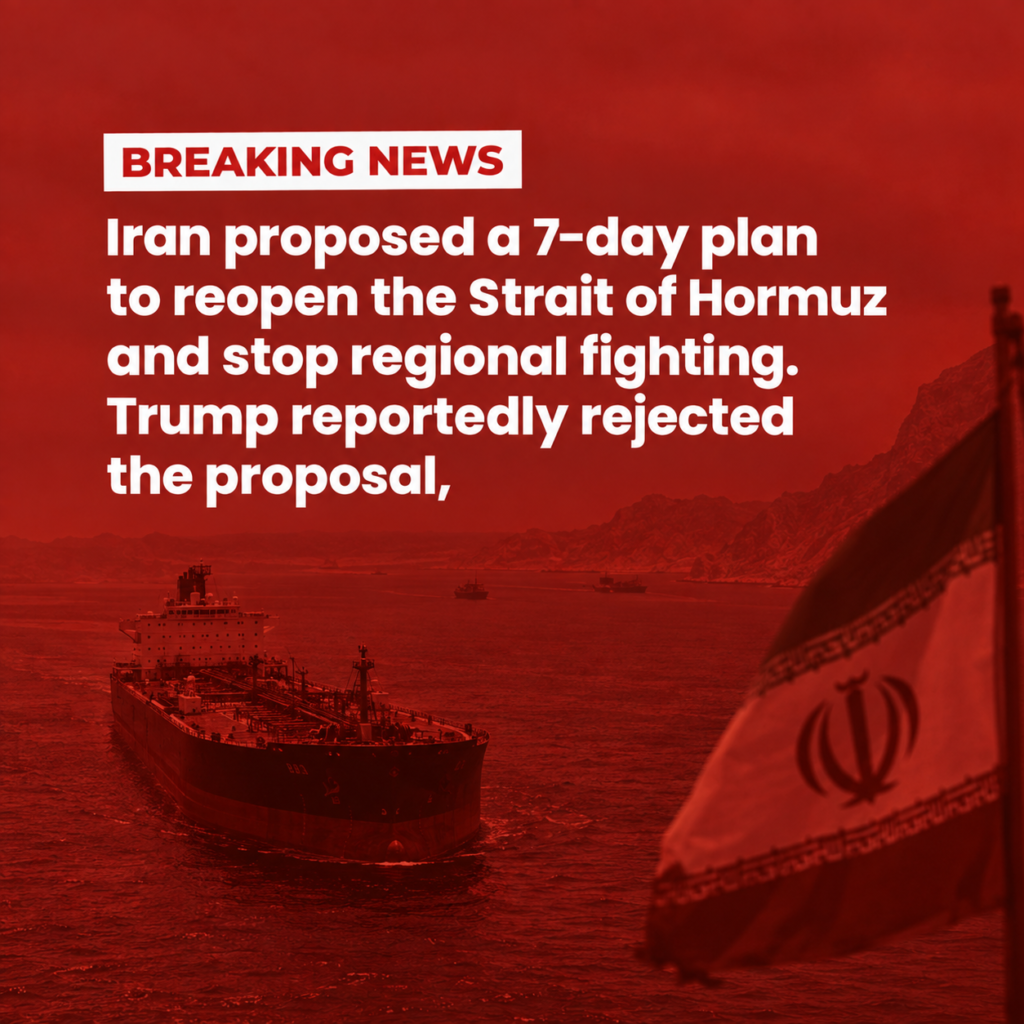
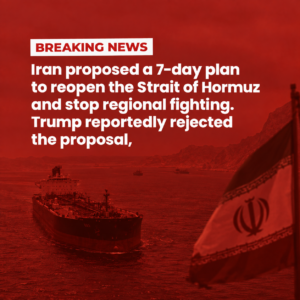
Iran told the United States it could reopen the Strait of Hormuz and halt regional fighting within seven days, but a U.S. newspaper reported hours later that President Donald Trump had turned the proposal down. Tehran said Saturday it was still waiting for an official American response.
Iranian Foreign Minister Abbas Araghchi disclosed the plan Thursday and Friday at press briefings on the sidelines of the United Nations General Assembly in New York, saying it had been passed to Washington through Qatari mediators. The Wall Street Journal reported Friday, citing unnamed U.S. officials, that Trump had rejected the proposal and told aides he expects American bombing of Iran to resume after the November midterm elections. The White House had not issued a public statement confirming or denying the report as of Saturday.
The dispute centers on the Strait of Hormuz, a narrow waterway between Iran and Oman through which roughly a fifth of the world’s oil once passed. Iran has kept the strait effectively closed since intensified fighting broke out with the United States and Israel, and its status has become the central bargaining chip in nearly seven months of war.
What Iran proposed
Araghchi said Tehran’s proposal closely tracks a 14-point memorandum of understanding that Iran and the United States signed in June in Islamabad, which fell apart in July after fighting resumed over control of the strait. Under the new plan, he said, Washington would need to agree to a comprehensive ceasefire covering all fronts, including Lebanon; release more than $12 billion in frozen Iranian assets; lift its naval blockade of Iranian ports; and waive sanctions on Iranian oil exports. In exchange, Iran would reopen the Strait of Hormuz to normal maritime traffic on the seventh day, with comprehensive talks on Iran’s nuclear program to begin immediately afterward.
“Iran has conveyed to the United States, through Qatar, a concrete seven-day plan,” Araghchi told reporters at the U.N. on Friday. “If the necessary conditions are met, the strait can be reopened, and normal maritime passage restored within seven days.” He said the choice rested with Washington and that Iran would not act under pressure or accept what he called coercion or intimidation.
Araghchi said the U.S. steps he outlined could realistically be completed within four to five days, meaning the strait could reopen on the sixth day under an accelerated version of the plan. He separately told reporters it would be preferable for a deal to be reached before the U.S. midterm elections in November, though he said that timing was ultimately for the American side to decide.
The reported rejection
The Wall Street Journal reported that Trump was skeptical Tehran would follow through on the plan’s terms and that he views a renewed U.S. bombing campaign against Iran as more likely, particularly after the midterms. Trump separately posted an image on his Truth Social platform of a map with the Strait of Hormuz circled and labeled “Trump Strait,” though he did not address the Iranian proposal directly in the post.
Iran said Saturday it had not received formal notice of a rejection from Washington and was still awaiting an official response. Reuters reported Saturday, citing a U.S. official, that Washington and Tehran remained engaged in “positive, constructive” discussions through mediators on issues including Iran’s nuclear program. The two accounts leave open whether the dispute reflects a complete break in diplomacy or disagreement over specific terms of the proposal.
Background
The war between the United States, Israel and Iran began Feb. 28, 2026, when U.S. and Israeli forces carried out a joint strike that killed Iran’s Supreme Leader, Ayatollah Ali Khamenei, along with other senior officials. Trump said at the time the strikes gave Iranians their best chance to reshape their government, while warning of further bombing. Fighting has continued intermittently since, disrupting oil shipments through the Strait of Hormuz and rattling global energy markets.
The Islamabad memorandum, signed by Washington and Tehran in June, had briefly established a broader ceasefire and a 60-day window for negotiations over sanctions and Iran’s nuclear program. It collapsed in July amid renewed fighting over the strait, which Iran has kept largely closed to shipping since March.
What follows
No independent confirmation of Trump’s rejection had been reported beyond the Wall Street Journal account as of Saturday, and the White House had not issued an on-the-record statement addressing the Iranian proposal. Whether Washington and Tehran continue mediated talks through Qatar, and whether either side alters the terms it has put forward, remained unclear.
Sources
Reporting draws on Iranian Foreign Minister Abbas Araghchi’s on-the-record remarks at the United Nations, carried by multiple wire services and Iranian state-linked media, and on the Wall Street Journal’s sourcing of U.S. officials for Trump’s reported rejection, which this article has not independently verified.
Wire services and international press
- France 24, “Trump reportedly rejects Iran’s 7-day plan to reopen Strait of Hormuz.” https://www.france24.com/en/middle-east/20260926-trump-reportedly-rejects-iran-s-7-day-plan-to-reopen-strait-of-hormuz
- Reuters via U.S. News, “Iran Awaits US Move After WSJ Report Says Trump Rejects Peace Plan.” https://www.usnews.com/news/world/articles/2026-09-25/iran-awaits-us-move-after-wsj-report-says-trump-rejects-peace-plan
- The Hill, “Iran’s offers 7-day plan to end hostilities with US, reopen Strait of Hormuz.” https://thehill.com/policy/international/6112561-iran-us-seven-day-peace-plan/
- The Washington Times, “Iran floats seven-day plan to end the war, reopen Strait of Hormuz.” https://www.washingtontimes.com/news/2026/sep/25/iran-floats-seven-day-plan-end-war-reopen-strait-hormuz/
- The Times of Israel, live coverage of Araghchi’s U.N. remarks. https://www.timesofisrael.com/liveblog_entry/iran-has-offered-us-seven-day-plan-for-hormuz-reopening-araghchi-says/
Local and Iran-linked press
- Press TV, “Iran FM outlines seven-day plan for conditional reopening of Strait of Hormuz.” https://www.presstv.co.uk/Detail/2026/09/25/777020/Iran-reopening-Hormuz-United-States-conditions
Background and prior proceedings
- Airwars, incident report on the Feb. 28, 2026 strike that killed Iran’s Supreme Leader. https://airwars.org/?p=429165
- NCR (National Catholic Reporter), background summary of the U.S.-Israel strikes on Iran. https://www.ncronline.org/taxonomy/term/172971
Editor’s note on sourcing Trump’s rejection of the plan rests solely on the Wall Street Journal’s citation of unnamed U.S. officials; this article treats it as a reported claim, not a confirmed fact, because Iran says it has received no formal U.S. response and no other outlet has independently corroborated the rejection with on-the-record sourcing. Details of the plan’s terms (the $12 billion asset figure, the blockade and sanctions conditions) are corroborated across Iranian and Western outlets and are treated as established. A Reuters account of “positive, constructive” U.S.-Iran talks, relayed through an unnamed U.S. official, is included because it comes from a named wire service, but its relationship to the WSJ’s rejection report could not be independently reconciled and is presented as a separate, unresolved data point.