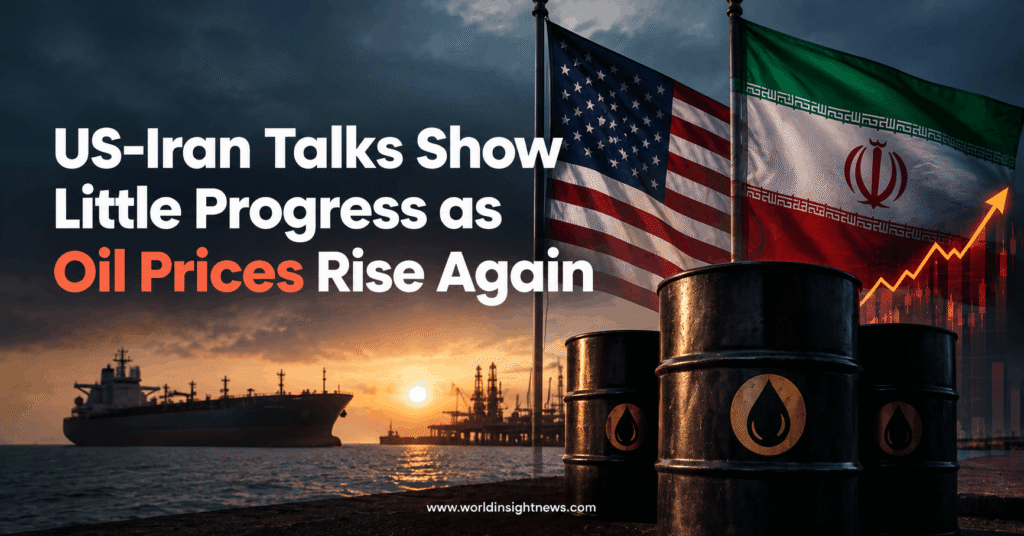
US-Iran Talks Show Little Progress as Oil Prices Rise Again
Oil prices moved higher on Thursday as uncertainty over renewed talks between the United States and Iran continued to keep traders focused on the risk to Middle East energy supplies.
The latest diplomatic contacts between Washington and Tehran have raised hopes of a possible path toward ending the conflict, but there is still no clear agreement. Reuters reported Thursday that oil prices rose by around 2% as the talks showed little sign of concrete progress.
US and Iran remain divided
The two countries held indirect discussions through mediators during the United Nations General Assembly in New York this week.
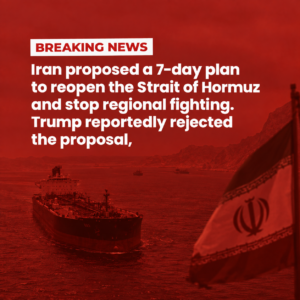
Iran has been pushing for the removal of the US naval blockade affecting Iranian ports, the release of frozen Iranian assets and the reopening of the Strait of Hormuz. Tehran has also indicated that further diplomacy could be possible if Washington addresses its conditions.
US officials, meanwhile, have continued to say that diplomacy remains possible. President Donald Trump said on September 22 that he believed the two countries could eventually reach a settlement, while maintaining that the US would not accept Iran obtaining a nuclear weapon.
But the diplomatic gap remains significant.
Why the Strait of Hormuz matters for oil
The main concern for energy markets is the Strait of Hormuz, a narrow waterway connecting the Persian Gulf with the Gulf of Oman.
A large share of global oil shipments normally passes through the strait. Disruption there can therefore affect not only Middle Eastern producers but also fuel prices in markets far outside the region.
Recent shipping restrictions and security risks have already affected oil flows. Reuters reported earlier this week that increased Saudi crude movements and greater tanker traffic through Hormuz helped push oil prices lower, showing how closely the market is watching changes in regional supply.
However, the improvement has not removed the risk.
A commercial vessel was struck in the Strait of Hormuz on September 23, according to Oman’s navy, with one crew member killed and others evacuated. The incident added another layer of uncertainty for shipping and energy markets.
Oil prices remain above $100
Oil prices have been highly sensitive to developments in the conflict.
On September 24, Brent crude was trading around the $102–$105 range depending on the point in the trading session, while US West Texas Intermediate was around the low-$90s. Reuters reported that Brent had fallen to about $102.13 earlier after Iran signalled that it remained open to diplomacy, but prices subsequently came under renewed upward pressure as investors saw little evidence of a breakthrough.
The movement shows the market’s dilemma.
If US-Iran diplomacy produces a credible agreement and shipping through Hormuz improves, oil prices could face downward pressure as fears of supply disruption ease.
But if negotiations fail and restrictions or attacks around the waterway continue, traders could continue pricing in a geopolitical risk premium.
What happens next?
The next important development will be whether the diplomatic contacts produce concrete steps rather than simply more discussions.
Iran has linked the reopening of the Strait of Hormuz to changes in US military pressure and the lifting of the blockade. Al Jazeera reported that Iranian officials said the waterway could potentially be reopened within days if Tehran’s conditions were met.
For oil traders, that makes the negotiations particularly important.
A genuine reduction in tensions could improve shipping conditions and increase confidence in future supplies. A breakdown in diplomacy could have the opposite effect, particularly if it leads to further disruption around Hormuz.
For now, there is no confirmed breakthrough.
The US and Iran are talking, but the two sides remain divided — and oil markets are responding to that uncertainty.
Key takeaway: The direction of oil prices may increasingly depend on whether US-Iran diplomacy can produce a practical agreement on the conflict and the Strait of Hormuz.