
How to Create Realistic 1980s-Style Photos with ChatGPT
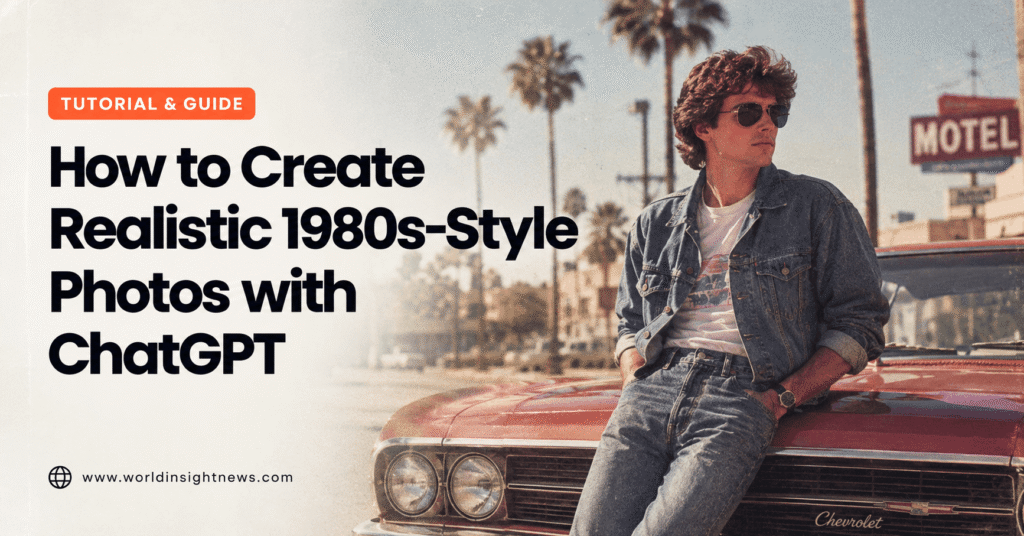
If you’ve scrolled through social media lately, you’ve probably seen the trend: people turning their modern photos into what look like faded, grainy snapshots pulled straight out of a 1987 photo album. The good news is you don’t need Photoshop skills or vintage film — you just need the right prompt. Here’s how to do it with ChatGPT’s image generation.
Why This Trend Works
The appeal isn’t just nostalgia. A well-crafted “vintage photo” prompt recreates very specific, recognizable artifacts of analog photography: film grain, color shifts, soft focus, and even the little orange date stamps disposable cameras used to print in the corner. Get those details right, and the image reads as authentic. Skip them, and it just looks like a filter.
Step 1: Start with a Clear Subject
Before touching style, describe what’s in the photo. Vague prompts produce generic results. Instead of “a person at a party,” try something concrete:
“A group of teenagers hanging out in a suburban garage, one of them holding a boombox”
Specificity gives the model something real to anchor the scene to, which matters more than people expect.
Step 2: Layer in Film Characteristics
This is where the “1980s” part actually happens. Describe the physical properties of film photography, not just the decade:
- Grain and softness — “shot on 35mm film with visible grain and slightly soft focus”
- Color cast — “warm, faded tones with a yellow-orange color shift typical of aged prints”
- Imperfect composition — “slightly off-center framing, like a casual snapshot rather than a posed photo”
- Lighting artifacts — “mild lens flare, soft vignette in the corners”
These cues matter more than simply saying “make it look like the 80s,” because they describe how film behaves rather than just naming an era.
Step 3: Add Period-Accurate Details
Grain and color alone won’t sell the decade — you need the right props and styling in the scene itself:
- Clothing: shoulder pads, high-waisted jeans, band tees, windbreakers
- Hair: perms, mullets, feathered bangs
- Objects: boomboxes, CRT televisions, rotary phones, arcade cabinets, wood paneling
- Cars: boxy sedans, station wagons
Pick two or three of these rather than listing everything — an overstuffed prompt tends to produce a cluttered, unfocused image.
Step 4: Add the Classic Date Stamp
One detail sells the effect instantly: the orange LCD date stamp disposable cameras burned into the corner of photos. Add a line like:
“A timestamp in the bottom right corner in orange digital font reading a date in 1986 or 1987”
It’s a small touch, but it’s one of the most recognizable markers of the era.
Putting It All Together
Here’s a full example prompt combining all four steps:
A candid 1980s film photograph of two friends sitting on the hood of a car outside a diner at night. Shot on 35mm film with visible grain and soft focus, warm faded tones with a yellow-orange color cast. Slightly off-center amateur composition, mild lens flare, soft vignette in the corners. One friend wearing a denim jacket, the other with feathered hair. Orange LCD date stamp in the bottom right corner reading “08 22 86.”
Tips for Better Results
- Choose indoor or outdoor lighting deliberately. Indoor flash photos from this era have a distinct washed-out look with harsh shadows — very different from soft outdoor daylight shots.
- Reference a camera type. Disposable cameras, Polaroids, and 35mm SLRs each produce a different grain and color signature — naming one helps steer the result.
- Don’t over-describe the “vintage” quality itself. Words like “nostalgic” or “retro” are vague to a model. Concrete physical descriptions (grain, color cast, lens flare) work far better than mood words.
- Iterate. If the first result looks too clean or too modern, ask for more grain, more color fade, or a more casual composition rather than starting over.
Final Thoughts
The trick to a convincing decade-specific photo isn’t naming the decade — it’s describing the physical fingerprints that decade’s technology left on images. Once you get comfortable layering film characteristics, period props, and small details like the date stamp, you can adapt this same approach to recreate the look of almost any era.