Venezuela Rocked by Twin Powerful Earthquakes, Leaving Dozens Dead and Hundreds Injured
Venezuela has been struck by one of the most devastating natural disasters in its recent history after two powerful earthquakes hit the country within less than a minute of each other, causing widespread destruction, loss of life, and panic across the capital city of Caracas and surrounding regions.
According to initial reports from international monitoring agencies and Venezuelan authorities, the first earthquake measured 7.2 on the Richter scale and was immediately followed by a stronger 7.5-magnitude earthquake. The epicenter was located approximately 160 kilometers west of Caracas, near the coastal region of Morón.
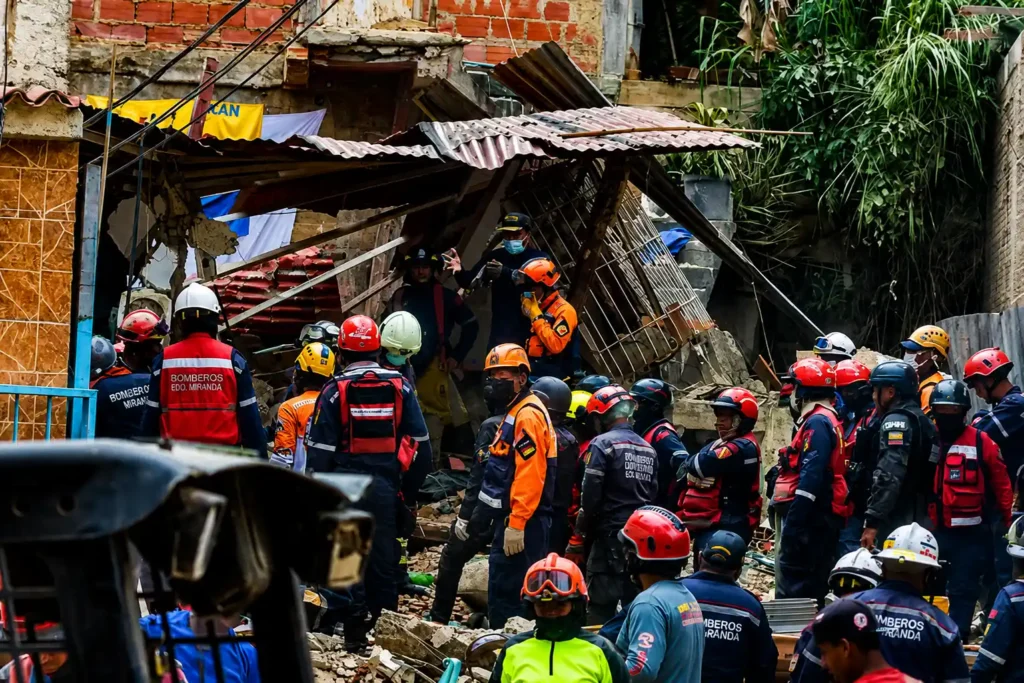
The twin earthquakes shook buildings across northern Venezuela, causing numerous structures to collapse and sending residents rushing into streets in fear. Emergency services continue to search for survivors trapped beneath debris as the country faces a growing humanitarian crisis.
Rising Death Toll and Hundreds Injured
Authorities have confirmed that at least 32 people have lost their lives while more than 700 individuals have been injured. Officials have warned that the casualty figure is expected to rise as rescue teams gain access to heavily damaged areas and continue recovery operations.
Hospitals across Caracas have reported receiving large numbers of injured residents suffering from fractures, head injuries, and trauma caused by falling debris. Medical facilities are operating under emergency conditions, with healthcare workers working around the clock to treat victims.
Thousands of residents spent the night outdoors, fearing additional aftershocks and further building collapses. Emergency shelters have been established to accommodate families displaced by the disaster.
Buildings Collapse Across Caracas
The earthquakes caused significant structural damage throughout Caracas, Venezuela’s largest city and economic center. Several residential and commercial buildings collapsed completely, while dozens of others suffered severe damage.
Witnesses described scenes of chaos as walls cracked, ceilings collapsed, and clouds of dust filled the air. Many residents reported hearing loud rumbling sounds moments before buildings began shaking violently.
Emergency responders, firefighters, police officers, and volunteers have been deployed across affected districts. Rescue teams equipped with heavy machinery and search dogs are working to locate survivors trapped beneath collapsed structures.
Officials stated that many roads have been blocked by debris, making rescue efforts more challenging. In several neighborhoods, power outages and communication disruptions have further complicated emergency operations.
Airport and Infrastructure Damage
Critical infrastructure has also been impacted by the disaster. Reports indicate that parts of Simón Bolívar International Airport suffered damage during the earthquakes, forcing authorities to temporarily suspend certain operations while safety inspections are conducted.
Transportation systems, including rail and metro services, experienced disruptions as engineers assessed tracks, stations, and tunnels for potential damage. Several highways connecting Caracas with neighboring regions were partially closed due to landslides and structural concerns.
Electricity outages affected thousands of households, while telecommunications networks experienced interruptions as service providers worked to restore connectivity.
Government officials have declared a state of emergency in affected areas to accelerate rescue operations and facilitate the distribution of aid and resources.
Rescue Operations Continue
Search-and-rescue teams have been working continuously since the earthquakes struck. Heavy equipment is being used to remove concrete slabs, steel beams, and other debris from collapsed buildings.
Rescuers have reported hearing signs of life beneath several damaged structures, giving hope that additional survivors may still be found. However, authorities acknowledge that the coming days will be critical.
International rescue experts have begun arriving in Venezuela to assist local emergency services. Several countries have offered humanitarian assistance, specialized search-and-rescue teams, medical supplies, and technical support.
Relief organizations are also mobilizing resources to provide food, water, temporary shelter, and medical assistance to affected communities.
Fear of Aftershocks
Seismologists have warned that aftershocks remain a serious concern. Smaller tremors have already been recorded following the main earthquakes, raising fears of additional structural failures.
Experts advise residents to avoid damaged buildings until safety inspections are completed. Authorities have also encouraged citizens to remain prepared for potential aftershocks and to follow official emergency instructions.
Many residents continue to sleep outdoors in parks, open spaces, and temporary shelters due to concerns that weakened structures could collapse during future tremors.
Emergency management agencies are distributing public safety information and conducting inspections of schools, hospitals, government buildings, and residential complexes.
Economic Impact
The disaster is expected to have significant economic consequences for Venezuela, which has already faced years of economic challenges.
Business districts in Caracas reported substantial damage to offices, shops, and commercial facilities. Several companies have temporarily suspended operations while damage assessments are conducted.
Insurance claims are expected to reach substantial levels as property owners begin documenting losses. Infrastructure repairs, reconstruction projects, and emergency relief efforts will likely require considerable financial resources.
Economists warn that recovery could take months or even years, depending on the extent of structural damage and the availability of reconstruction funding.
Venezuela’s History of Earthquakes
Although Venezuela is not typically associated with the world’s most active seismic zones, the country has experienced several destructive earthquakes throughout its history.
One of the most catastrophic events occurred in 1812 when a powerful earthquake devastated Caracas and surrounding regions, causing tens of thousands of deaths. Significant earthquakes have also struck the country during the twentieth and twenty-first centuries.
Geologists explain that Venezuela’s location near complex tectonic boundaries makes it vulnerable to seismic activity. The movement of tectonic plates beneath the Caribbean region can generate powerful earthquakes capable of causing widespread destruction.
The 2026 earthquakes are already being described as among the strongest and most damaging to affect the country in more than a century.
International Support and Solidarity
Messages of sympathy and support have poured in from governments, international organizations, and humanitarian agencies worldwide.
Several countries have pledged emergency assistance and technical expertise to support Venezuela’s response efforts. International relief organizations are coordinating with local authorities to identify urgent needs and deliver aid as quickly as possible.
Humanitarian groups have emphasized the importance of rapid medical support, emergency shelter, clean drinking water, and food supplies for affected populations.
As rescue operations continue, the international community remains focused on supporting survivors and helping Venezuela recover from this devastating disaster.
Looking Ahead
For millions of Venezuelans, the coming days will be filled with uncertainty. Rescue teams continue their search for survivors, families await news of missing loved ones, and authorities work to restore essential services.
While the full scale of the disaster has yet to be determined, the twin earthquakes have left a profound impact on the nation. Entire communities face the challenge of rebuilding homes, businesses, and infrastructure damaged by one of the most powerful seismic events in Venezuela’s modern history.
As emergency workers race against time and aftershocks continue to shake the region, the resilience of the Venezuelan people is being tested once again. The focus now remains on saving lives, assisting survivors, and beginning the long process of recovery and reconstruction.
The situation remains fluid, and authorities continue to provide updates as rescue and relief operations progress across the affected areas.