Three Months at Sea and Ashore: How the World Traced a Rare Hantavirus Off a Single Cruise Ship
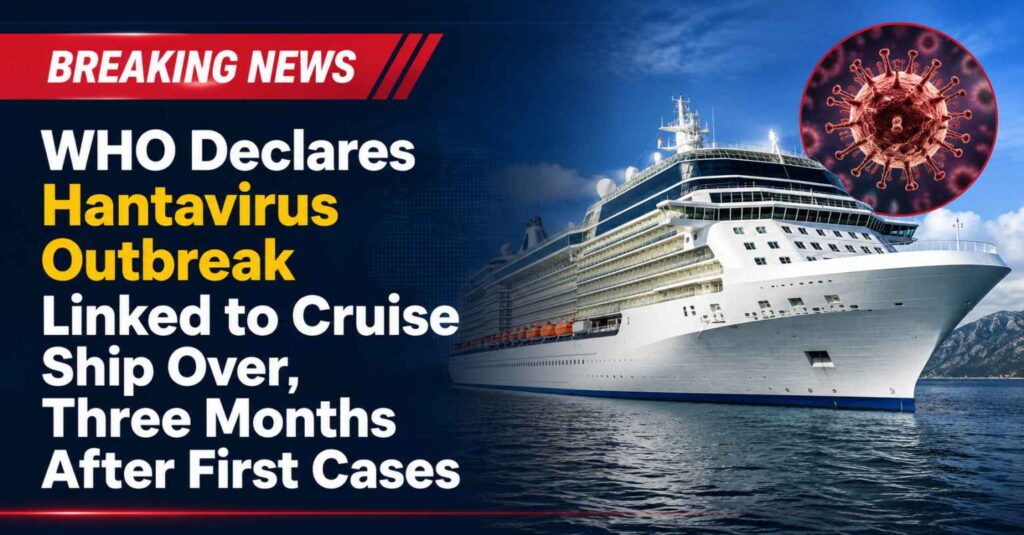
The World Health Organization has declared the Andes virus outbreak linked to the expedition vessel MV Hondius over. Behind that brief announcement lies a nearly three-month effort that reached across 33 countries, tested the limits of contact tracing, and left three people dead.
On July 2, 2026, the World Health Organization issued a short and carefully worded notice: the outbreak of hantavirus infection linked to travel aboard the cruise ship MV Hondius was over. The last known close contact of an infected person had completed quarantine and returned a negative test. No new cases connected to the ship had been reported since late May. After nearly three months of monitoring, the surveillance apparatus that had spanned dozens of countries could finally stand down.
The final numbers were modest in scale but heavy in consequence. Thirteen people were infected. Three of them died — a case fatality ratio of roughly 23 percent. Twelve of the infections were confirmed in laboratories as Andes virus, a member of the hantavirus family, while one remained classified as a probable case. Every one of them had been aboard the same vessel.
What made the episode notable was not the raw count but its geography, its cause, and the questions it raised about how an infectious disease can move through the modern world when its carriers are travelers who scatter to their home countries the moment a voyage ends.
A routine departure
The MV Hondius is a Dutch-flagged expedition ship, the kind of vessel built for small-group voyages to remote latitudes rather than mass-market cruising. On April 1, 2026, it left port in Argentina and set a course across the South Atlantic toward Cape Verde, off the west coast of Africa — a long ocean crossing of the sort that expedition travelers seek out precisely for its distance from ordinary life.
For the first weeks, the voyage appears to have proceeded normally. It was only later, as passengers began falling ill with severe respiratory symptoms, that the outlines of a serious problem came into focus. The illness did not behave like an ordinary shipboard bug. It was more severe, and in some cases it was fatal.
The alarm is raised
On May 2, 2026, the World Health Organization was formally notified of a cluster of severe acute respiratory illness aboard the ship. That notification set in motion an international investigation. Samples were tested, and the answer that came back was unusual enough to command immediate attention: the cause was the Andes virus.
For epidemiologists, the identification was significant. Hantaviruses are not typically associated with ships, or with person-to-person spread at all. That this particular strain had been found in a shipboard cluster meant the response would have to account for a mode of transmission that most hantavirus outbreaks never involve.
By May 11, all passengers had disembarked. Many were evacuated to their home countries, where they entered quarantine and came under the watch of national health authorities. The ship, its crew, and its former passengers were now dispersing across the globe — and with them, potentially, the virus.
Understanding the Andes virus
Hantaviruses are, as a family, primarily diseases of rodents. Humans usually become infected through contact with the droppings, urine, or saliva of infected animals, often by inhaling contaminated particles in enclosed spaces where rodents have been present. In most of the world, hantavirus infection is a story about exposure to wildlife, not about catching something from another person.
The Andes virus is the exception that has long preoccupied researchers. Found chiefly in parts of South America, it is the only hantavirus known to transmit directly from one human to another. Even so, that human-to-human spread has historically been limited. Documented cases have tended to occur among people in very close and sustained contact — household members, partners, and caregivers — and generally required prolonged exposure. Some evidence suggests the virus may spread through airborne routes under certain conditions, which is part of what makes it a subject of continued study.
A cruise ship, in this light, represented an almost tailor-made environment for amplifying whatever transmission risk the virus carried. Passengers and crew live in confined quarters, share enclosed indoor spaces, dine and socialize together, and remain in one another’s company for days or weeks on end. The very features that make an expedition voyage appealing — a small community traveling together to distant places — were also the features that could help a person-to-person pathogen find new hosts.
Symptoms and severity
Hantavirus infections can produce serious illness, and the cases aboard the MV Hondius reflected that. The cluster first drew notice as severe acute respiratory illness, consistent with the way Andes virus infection can progress. Of the thirteen recorded cases, ten were sick enough to require hospital admission.
The outcomes varied. Eight of those hospitalized recovered and were eventually discharged. Two remained under medical care at the time the outbreak was declared over — one in South Africa and one in France, an illustration of just how far the ship’s passengers had traveled once the voyage ended. Three people did not survive. The resulting case fatality ratio of roughly 23 percent underscores that, while the outbreak was small in number, the disease it involved was far from trivial.
The last case linked to the ship was recorded on May 25. From that point forward, the central task was no longer treating new infections but confirming that no further chains of transmission were quietly unfolding somewhere among the hundreds of people who had passed through the ship or come into contact with those who had.
A response across 33 countries
The contact-tracing effort that followed was striking in its reach. Health authorities conducted contact identification and follow-up across 33 countries and overseas territories — a figure that captures how thoroughly a single voyage can seed connections around the globe.
The work extended well beyond the passenger manifest. Investigators followed up on a case linked to Tristan da Cunha, one of the most remote inhabited places on Earth, in the South Atlantic. They traced passengers on two separate international flights, recognizing that air travel could have carried exposed individuals onward before anyone knew there was cause for concern. And they identified healthcare workers and airport staff who had assisted patients before the outbreak was even recognized — people who had done their jobs without knowing they might be exposed to a rare virus.
This is the unglamorous machinery of global health security: lists of names, phone calls, quarantine arrangements, and repeated testing, coordinated across borders and time zones. The European Centre for Disease Prevention and Control and national health agencies in affected countries worked alongside the WHO throughout. Each contact who cleared quarantine without developing illness was one more link confirmed to be broken.
Why one ship became a global concern
The MV Hondius outbreak is, in miniature, a case study in a recurring dilemma of modern public health. An outbreak can begin in a single, contained setting — here, one vessel in the middle of the ocean — and yet become an international matter within days, simply because the people involved come from and return to many different countries.
Cruise ships have long been recognized as environments where infectious disease can spread efficiently, from gastrointestinal illnesses to respiratory viruses. What set this episode apart was the specific pathogen: a hantavirus strain with the rare capacity for human-to-human transmission, encountered in a setting almost purpose-built to test that capacity. The combination gave health authorities good reason to treat the situation seriously and to cast their contact-tracing net as widely as they did.
The wide geographic dispersal also complicated the response. When exposed travelers fly home to South Africa, France, and dozens of other places, monitoring them requires cooperation among many separate health systems, each with its own procedures. That the outbreak was ultimately contained without evidence of sustained onward spread beyond the ship’s community is, in that light, a meaningful outcome.
The ship returns to service
Even as the human dimension of the outbreak played out in hospitals and quarantine arrangements, the vessel itself moved back toward normal operation. The MV Hondius was cleared to resume sailing in mid-June, with voyages from June 13 onward proceeding as scheduled. The decision to return the ship to service reflected authorities’ assessment that the immediate risk aboard had been addressed.
What the episode leaves behind
With the outbreak formally declared over, the focus is expected to shift from active response to review. Investigators and researchers will want to understand how the Andes virus came to be aboard the ship in the first place, how it moved among passengers, and what the episode reveals about managing person-to-person hantavirus transmission in enclosed travel settings. Each such outbreak, uncommon as they are, adds to a limited body of evidence about a virus that remains incompletely understood.
There are practical questions too. Confined travel environments — cruise ships, long flights, remote expeditions — concentrate people in ways that can favor the spread of certain pathogens. The MV Hondius outbreak may inform how operators and health authorities prepare for and respond to unusual infectious threats in those settings, from surveillance to evacuation planning to cross-border coordination.
For the moment, though, the WHO’s judgment is clear: the immediate danger has passed. The last contact has cleared quarantine. The ship is sailing again. The global monitoring effort that defined the past three months has concluded. Three people are gone, and a larger number recovered, and the questions raised along the way are likely to occupy public-health researchers well after the headlines have faded.
Sources: WHO Disease Outbreak News; MV Hondius hantavirus outbreak — Wikipedia; ECDC — Andes hantavirus outbreak in cruise ship; CDC — Andes Virus Outbreak on a Cruise Ship; CBC News; ABC News.