Telenor Pakistan Officially Merges with Ufone After Court Approval: What It Means for Millions of Customers
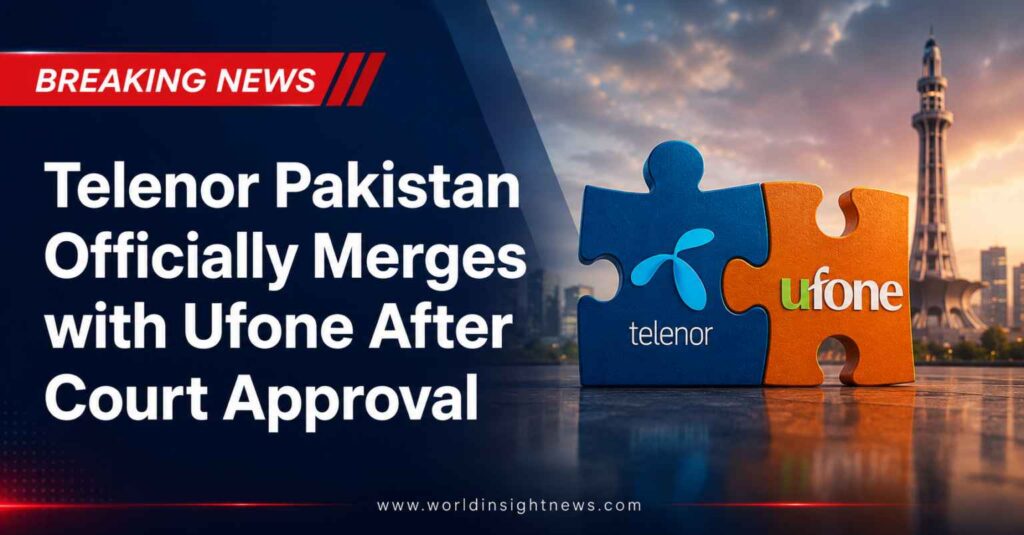
Pakistan’s telecommunications industry has entered a new chapter with the official merger of Telenor Pakistan and Ufone. On July 1, 2026, the Islamabad High Court (IHC) granted the final statutory approval, making the merger legally effective and bringing one of the country’s largest corporate telecom transactions to a successful conclusion.
With this approval, Telenor Pakistan has officially ceased to exist as a separate legal entity. Its operations, network infrastructure, spectrum, employees, and customer base have been integrated into Pak Telecom Mobile Limited (PTML), a wholly owned subsidiary of Pakistan Telecommunication Company Limited (PTCL). The combined company will now operate under the PTML (Ufone 5G) umbrella.
For millions of mobile users across Pakistan, the announcement has sparked several questions. Will Telenor SIM cards continue to work? Will customers lose their existing packages? Is there any need to replace SIM cards? More importantly, what does this merger mean for the future of Pakistan’s telecom industry?
This article explains everything you need to know about the merger, why it happened, its impact on customers, and what lies ahead for Pakistan’s mobile communications sector.
A Historic Milestone for Pakistan’s Telecom Industry
The merger between Telenor Pakistan and Ufone is one of the most significant developments in Pakistan’s telecom sector over the past decade. It follows months of regulatory reviews and technical evaluations by the Pakistan Telecommunication Authority (PTA), culminating in final legal approval from the Islamabad High Court.
From July 1, 2026, Telenor Pakistan officially became part of PTML, ending its independent operations after serving Pakistani customers for nearly two decades.
The merger is expected to strengthen the country’s digital infrastructure by combining the strengths of both operators. Instead of maintaining two separate networks, the unified company will utilize shared infrastructure, expanded spectrum resources, and integrated operational systems to improve efficiency and customer experience.
Why Did Telenor Pakistan Merge with Ufone?
The telecom industry has become increasingly competitive, requiring operators to invest heavily in network expansion, faster mobile internet, digital services, and future technologies such as 5G. Operating independently has become more challenging due to rising infrastructure costs, increasing customer expectations, and the need for continuous technological upgrades.
By merging their operations, Telenor Pakistan and Ufone aim to create a stronger and more financially stable telecom operator capable of competing effectively with other major players in Pakistan’s market.
The merger also allows the company to eliminate duplicate infrastructure, optimize network resources, and improve operational efficiency while reducing long-term costs.
What Happens to Telenor Pakistan?
One of the biggest outcomes of this merger is that Telenor Pakistan no longer exists as a separate legal company.
Its business operations have been completely transferred to Pak Telecom Mobile Limited (PTML), which already operates Ufone services across Pakistan.
This transfer includes:
- Mobile network infrastructure
- Customer accounts
- Radio spectrum
- Technical systems
- Employees
- Business operations
- Digital platforms
Although customers may continue seeing the Telenor brand during parts of the transition, the company itself has legally merged into PTML.
What Does the Merger Mean for Existing Customers?
Naturally, existing customers have many concerns. Fortunately, both Ufone and PTCL have assured subscribers that services will continue without interruption during the transition period.
Customers can continue using:
- Existing mobile numbers
- Current SIM cards
- Voice calling services
- SMS services
- Mobile internet
- Recharge facilities
There is currently no requirement for customers to replace their SIM cards or visit franchise centers unless specifically instructed by the company in the future.
The migration will happen gradually as backend systems are integrated over the coming months.
Network Integration Is Already Underway
While the legal merger has been completed, the technical integration of both companies is still ongoing.
According to company officials, subscribers from both networks are already operating on the same infrastructure in several cities, including Karachi, Hyderabad, Faisalabad, and other selected locations.
The integration process involves combining:
- Mobile towers
- Radio frequencies
- Network equipment
- Customer databases
- Billing systems
- Digital platforms
These upgrades will continue over the coming months until both networks operate as a fully unified system.
Market Position After the Merger
According to Pakistan Telecommunication Authority (PTA) data cited in the Dawn report, Pakistan had more than 206 million mobile subscribers by the end of May 2026.
Following the merger:
- Jazz remains the country’s largest telecom operator with 36.42% market share.
- The newly merged PTML (Ufone and Telenor) now controls 35.91% of the market.
- Zong follows with 26.62% of subscribers.
This makes the merged company one of Pakistan’s strongest mobile operators, creating a much more competitive telecom landscape.
Benefits Expected from the Merger
The combined company expects several long-term benefits for customers and the industry.
Better Network Coverage
By combining infrastructure, the company can improve signal quality and expand coverage into underserved areas while reducing network congestion.
Faster Mobile Internet
The merged spectrum resources should allow greater network capacity, potentially delivering better mobile data speeds during peak usage.
Stronger Investment in 5G
Deploying nationwide 5G services requires significant financial investment. A larger telecom operator is better positioned to invest in next-generation technologies, fiber infrastructure, and digital services.
Improved Customer Experience
The integration is also expected to improve digital platforms, customer support, and service quality by combining the expertise and resources of both companies.
Challenges During the Transition
Although the merger offers several long-term advantages, some short-term challenges are expected.
A senior Ufone executive indicated that approximately 4 million subscribers out of the combined customer base of around 74 million may switch to competing networks during the integration period.
Such customer movement is common during large telecom mergers as users evaluate network performance and service quality.
Additionally, integrating billing systems, customer databases, and network infrastructure is a complex process that will take time. Customers may notice minor operational changes as the migration progresses, although the companies have pledged to minimize disruptions.
Leadership’s Vision
PTCL Group President and CEO Hatem Bamatraf described the merger as a defining moment for both the company and Pakistan’s telecom industry. He thanked the Government of Pakistan, regulatory authorities, employees, and customers for supporting the lengthy approval process.
According to the company, the primary objective is to provide customers with stronger connectivity, better digital experiences, and innovative telecom services while accelerating Pakistan’s digital transformation.
Conclusion
The official merger of Telenor Pakistan into Ufone marks one of the most significant milestones in Pakistan’s telecommunications history. Effective from July 1, 2026, the merger legally combines two major mobile operators into a stronger organization with nearly 36% market share, expanded infrastructure, and greater capacity to invest in future technologies.
For customers, the transition is expected to be smooth. Existing SIM cards and mobile numbers will continue to function, while backend systems are integrated gradually over the coming months. In the long run, subscribers can expect improved connectivity, enhanced digital services, stronger network performance, and increased investment in next-generation technologies.
As Pakistan’s demand for mobile data and digital services continues to grow, this merger has the potential to reshape the country’s telecom landscape, creating a more competitive market and supporting future innovations such as nationwide 5G deployment.
Source