
El Mencho and the Rise of CJNG: How Mexico’s Cartel Empire Expanded
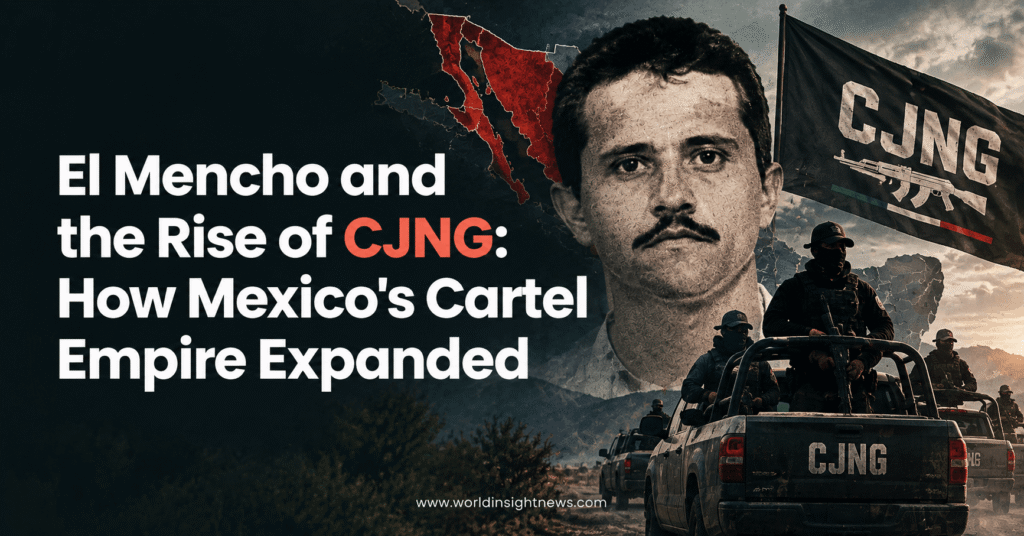
The rise of the Jalisco New Generation Cartel (CJNG) is one of the most significant developments in Mexico’s modern organized-crime landscape. At the center of the story is its reported leader, Nemesio Rubén Oseguera Cervantes, better known as El Mencho.
According to the documentary transcript, El Mencho rose from a poor farming background to become one of Mexico’s most wanted drug traffickers and the leader of a cartel that expanded across large parts of the country.
From Farmer’s Son to Cartel Leader
The documentary says El Mencho was born in 1966 in Michoacán and grew up in a poor family of avocado farmers. He reportedly left school at a young age before becoming involved with the Valencia family’s marijuana operations.
He later traveled illegally to the United States, where he became involved in drug dealing and was exposed to the growing methamphetamine trade. After several arrests and a prison sentence in Texas, he was deported to Mexico.
In the 1990s, he reportedly joined the Mexican state police before returning to Michoacán and becoming connected to the Millennial Cartel through marriage.
That connection eventually brought him into contact with larger criminal organizations, including the Sinaloa and Gulf cartels.
The Birth of CJNG
The documentary traces the emergence of CJNG to the violent struggle between Mexican criminal organizations during the early 2000s.
After the Millennial Cartel was weakened, El Mencho and other members moved toward Jalisco and became associated with Sinaloa’s network.
In 2011, a group calling itself the Matazetas claimed responsibility for killing members of Los Zetas. The organization later became known as the Jalisco New Generation Cartel, or CJNG.
El Mencho emerged as its leader.
From there, the cartel expanded rapidly.
A Different Model of Expansion
One of the central arguments in the documentary is that CJNG expanded partly because of its decentralized structure.
Instead of directly controlling every territory, the cartel reportedly absorbed or worked with local criminal groups. These groups could continue operating independently while adopting the CJNG name and sending part of their profits upward.
The documentary compares this model to a franchise system.
That structure allowed CJNG to expand without having to build a completely centralized organization in every location.
Drugs Were Only One Part of the Business
Drug trafficking remained at the center of CJNG’s activities, particularly methamphetamine, cocaine, heroin and later fentanyl.
But the documentary says the organization also diversified into other criminal markets.
These allegedly included fuel theft, extortion, migrant smuggling, illegal logging, fishing, livestock operations and other illicit businesses.
The purpose of diversification was straightforward: dependence on one source of income creates vulnerability. Multiple revenue streams can make a criminal organization more resilient when authorities disrupt one part of its operation.
Violence and the Mexican State
CJNG’s expansion was accompanied by increasingly direct confrontations with Mexican security forces and rival cartels.
The documentary describes several attacks attributed to CJNG, including ambushes against police and an attack in 2015 in which a Mexican military helicopter was reportedly brought down.
The violence helped establish El Mencho’s reputation as one of Mexico’s most dangerous cartel leaders.
The organization also developed a strong propaganda presence. According to the documentary, CJNG members used social media, public displays of generosity and recruitment efforts to build influence in some communities.
At the same time, authorities continued targeting the organization’s leadership.
The United States Targets CJNG
CJNG eventually became a major focus of U.S. law enforcement.
The documentary describes Project Python, a major operation targeting the organization. Hundreds of people were reportedly arrested, while members of El Mencho’s family and inner circle were also targeted.
Despite these arrests, the documentary argues that CJNG remained operational.
This illustrates a major problem with the traditional “kingpin strategy”: removing individual leaders does not necessarily destroy a decentralized criminal organization.
The Search for El Mencho
For years, El Mencho reportedly avoided capture by maintaining an extremely low profile.
The documentary describes him as living in a heavily protected mountain hideout and limiting the use of electronic communications.
Eventually, Mexican intelligence reportedly identified a woman connected to him and tracked her movements using surveillance technology.
She was followed to a compound in Tapalpa, Jalisco.
The surveillance reportedly produced a crucial clue: footage appeared to show a man believed to be El Mencho meeting her.
Mexican authorities then prepared a military operation.
The Reported Final Operation
According to the documentary, Mexican special forces and military helicopters raided the compound.
A firefight reportedly followed as cartel gunmen resisted the operation.
El Mencho and two other men initially escaped into nearby forest, but soldiers eventually captured him after he was seriously wounded.
The documentary then claims that he died while being transported by helicopter to a hospital.
The aftermath was reportedly chaotic.
CJNG members allegedly responded by blocking roads, setting vehicles and businesses on fire and attacking security forces across multiple Mexican states.
The documentary says more than 70 people died during the operation and its aftermath.
What Happens to CJNG After El Mencho?
The death or removal of a cartel leader does not necessarily mean the end of the organization.
The documentary itself acknowledges that El Mencho’s actual level of control over CJNG may already have been changing before his reported death.
It also describes the killing of another senior figure and the arrest of additional cartel leadership.
Several potential successors are reportedly positioned to compete for control.
One name mentioned in the documentary is El Mencho’s stepson, known as El Pelón or El Zerote.
Whether CJNG remains unified or fragments into competing factions could determine what happens next.
A Cartel Without Its Kingpin
The story of El Mencho ultimately illustrates a broader problem facing governments fighting organized crime.
Criminal organizations can survive the loss of individual leaders when their networks, finances, territory and local alliances remain intact.
CJNG’s rise was not based solely on one individual. It involved recruitment, territorial expansion, international drug trafficking, diversified criminal income and relationships with other criminal organizations.
That means capturing or killing a leader may change the balance of power without necessarily eliminating the underlying organization.
The next chapter of CJNG’s history will depend on whether its remaining leadership can maintain the cartel as a unified organization—or whether internal competition creates another cycle of fragmentation and violence.