Pakistan Says Makkah Defence Pact Is Defensive, Rules Out Expansion For Now
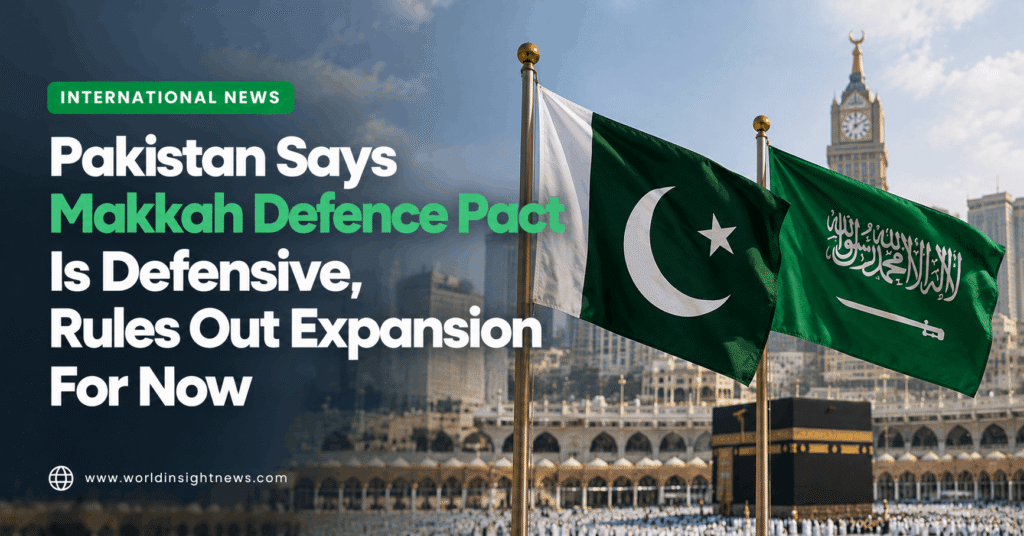
Pakistan’s Foreign Office said Thursday that a mutual-defense agreement it signed last month with Saudi Arabia and Turkey is defensive in nature and that plans to expand the pact to other countries are not currently under discussion.
Foreign Office spokesperson Sajjad Haider Khan told a weekly press briefing in Islamabad that the Makkah Defence Alliance is intended primarily “to ensure regional security through deterrence.” He said Pakistan, Saudi Arabia and Turkey must first consolidate their own cooperation under the pact before any wider membership is considered, and that no discussions on expansion are taking place “at this stage.”
Khan said the three countries are holding consultations at various levels and that a decision on admitting other members would come later. He added that the alliance remains in an early stage of formation, with work still needed to finalize its structure, procedures and operating mechanisms.
Origins of the pact
The agreement, formally called the Makkah Joint Defence Agreement, was signed Aug. 7 in Mecca, Saudi Arabia, by Pakistani Prime Minister Shehbaz Sharif, Saudi Crown Prince Mohammed bin Salman and Turkish President Recep Tayyip Erdogan. It expanded a bilateral defense pact Pakistan and Saudi Arabia signed a year earlier, in September 2025, to include Turkey. Under the agreement, an armed attack on any one signatory is to be treated as an attack on all three, according to a joint statement issued by the three governments.
A first ministerial meeting under the pact was held Aug. 31 in Istanbul, where the parties agreed to establish a permanent secretariat based in Riyadh, Saudi Arabia, to be led initially by a secretary-general from Pakistan for a three-year term, the Foreign Office has said separately.
Pakistan’s foreign minister said in the days after the signing that the pact was not directed against any country and did not replace or override any of the signatories’ other bilateral or multilateral agreements, according to the Associated Press. Turkey’s foreign minister, Hakan Fidan, has said the arrangement identifies no specific adversary and is not aimed at Iran.
Why the question came up now
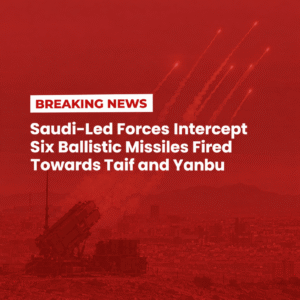
Thursday’s remarks followed a question at the briefing about how Pakistan intends to meet its obligations under the pact after Yemen’s Houthi rebels launched missile and drone strikes on southern Saudi Arabia this week. Saudi authorities said the attacks, which targeted oil facilities and other infrastructure in the cities of Abha, Khamis Mushait, Jizan and Najran, wounded at least 73 people. The Houthis said the strikes were in response to Saudi airstrikes in Yemen, including one they said hit a prison and killed several people; Saudi officials have not commented on that allegation.
Pakistan’s defense minister, Khawaja Asif, said earlier in the week that an unprovoked attack on Saudi Arabia, or a spillover of the Yemen conflict into Saudi territory, would make the Makkah agreement “operational,” according to Al Jazeera. Khan reaffirmed Thursday that Pakistan supports Saudi Arabia’s sovereignty and territorial integrity and condemned the Houthi strikes.
Neither the Foreign Office nor Pakistani officials have said what specific steps, if any, Pakistan would take under the pact in response to the Houthi attacks. The text of the Makkah agreement has not been made public, and analysts have noted it does not establish a joint military command, standing forces or a defined trigger mechanism, according to the Arab Center Washington DC.
What follows
The Foreign Office said further details on the alliance’s structure and on any future meetings would be shared as they become available, without giving a specific timetable. Officials have said the question of admitting additional members will be revisited once Pakistan, Saudi Arabia and Turkey have further developed the pact’s institutions.
It remains unconfirmed what, if any, concrete military or logistical response the agreement would require of Pakistan or Turkey should the fighting between Saudi Arabia and the Houthis escalate further.
Sources
Pakistan’s official position on the pact’s defensive character and expansion is drawn from Thursday’s Foreign Office briefing, reported by multiple Pakistani outlets in near-identical terms; context on the pact’s origins and the Houthi attacks is drawn from international wire and regional coverage.
Wire services and international press
- Associated Press, via PBS NewsHour, “Pakistan says new defense pact with Saudi Arabia and Turkey is ‘purely defensive’ and open to others.” https://www.pbs.org/newshour/world/pakistan-says-new-defense-pact-with-saudi-arabia-and-turkey-is-purely-defensive-and-open-to-others
- Al Jazeera, “Houthi attacks on Saudi Arabia could activate defence pact, Pakistan says.” https://www.aljazeera.com/news/2026/9/9/pakistan-warns-mecca-defense-pact-will-activate-after-houthi-attacks
- Al Jazeera, “Saudi Arabia says 73 wounded as Houthis attack civilian and energy sites.” https://www.aljazeera.com/news/2026/9/8/houthi-attacks-on-saudi-arabia-have-wounded-73-civilians-official-says
- NPR/AP, “Houthi attacks on Saudi Arabia ignite fires at oil facilities and wound 73 people.” https://www.npr.org/2026/09/08/g-s1-142296/houthi-attacks-saudi-arabia
Local press (proceedings and statements)
- Dawn, “FO says Makkah defence pact ‘defensive’ in nature, expansion currently ‘not on the cards.'” https://www.dawn.com/news/2028847/fo-says-makkah-defence-pact-defensive-in-nature-expansion-currently-not-on-the-cards
- Pakistan Observer, “Pakistan says no plan to expand Makkah pact for now, calls it defensive alliance.” https://pakobserver.net/pakistan-says-no-plan-to-expand-makkah-pact-for-now-calls-it-defensive-alliance/
- Daily Times, “FO says Makkah defence pact remains focused on regional security.” https://dailytimes.com.pk/1550904/fo-says-makkah-defence-pact-remains-focused-on-regional-security/
Background and prior proceedings
- Arab Center Washington DC, “Diversification Without Substitution: What the Mecca Joint Defense Agreement Offers Saudi Arabia” (August 2026). https://arabcenterdc.org/resource/diversification-without-substitution-what-the-mecca-joint-defense-agreement-offers-saudi-arabia/
- Council on Foreign Relations, “The U.S.-Led Middle East Order Is Over. The Mecca Agreement Proves It.” (August 2026). https://www.cfr.org/articles/the-u-s-led-middle-east-order-is-over-the-mecca-agreement-proves-it
Editor’s note on sourcing Casualty figures and details of the Houthi strikes and Saudi counterstatements are corroborated across Al Jazeera, NPR/AP and CNN reporting. The characterization of the pact as lacking a joint command or defined trigger mechanism rests on a single analytical source (Arab Center) rather than an official document, since the text of the Makkah agreement has not been published; it is flagged here as an outside assessment rather than a confirmed fact. What concrete action, if any, Pakistan or Turkey would take should the pact be invoked has not been stated by any government and is noted as unconfirmed.