
Israel, Turkey Trade Warnings Over Syria Airbase Strike
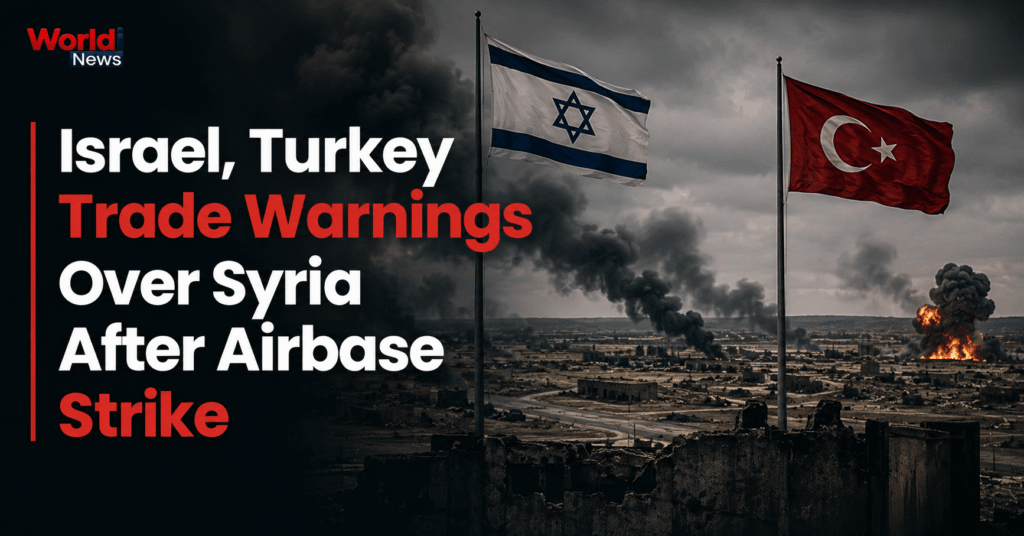
Israel and Turkey have traded escalating warnings since an Israeli strike hit Syria's Abu al-Duhur airbase on Aug. 18.
By World Insight News Desk Aug. 22, 2026
Israel and Turkey escalated public warnings this week over rival influence in Syria, days after Israeli warplanes struck a Syrian airbase that Israel said was being prepared for a Turkish military deployment, a claim Ankara and Damascus both deny.
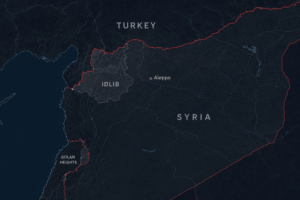
Eight Israeli airstrikes hit the runway of the Abu al-Duhur airbase in Idlib province, in northwestern Syria, before dawn on Aug. 18, causing damage to the facility but no casualties, according to Syrian state media and satellite imagery reviewed by news organizations. Israel’s government said the strikes were meant to stop Turkish forces from establishing themselves at the base, which lies south of Aleppo, Syria’s second-largest city.
The strikes were ordered after Israel said Damascus was on the verge of allowing Turkish troops to deploy at Abu al-Duhur in breach of an understood security “status quo” between Israel and Syria, according to a statement from Israeli Prime Minister Benjamin Netanyahu’s office. Israel’s Defense Ministry said it had repeatedly warned Syria against permitting such a deployment.
Syrian Foreign Minister Asaad al-Shaibani rejected that account in written responses to the news outlet Axios, saying no Turkish base was planned at the site and that work underway there was limited to repairing an airfield damaged during Syria’s civil war, for use by the Syrian air force. He said Turkish military officers had visited the base several days before the strike as part of ongoing training cooperation, not to establish a permanent presence. Turkey’s Defense Ministry said Thursday that no Turkish delegation was present before or during the attack and that Turkey would continue supporting Syria’s efforts to build up its own military infrastructure.
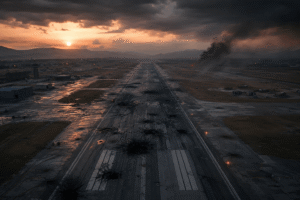
Rival accounts of what was at the base
Israeli officials maintain their intelligence showed an imminent Turkish deployment. Reuters reported that the matter was discussed in a rare phone call on Aug. 14 between Mossad chief Roman Gofman and Shaibani, days before the strike. Israeli Defense Minister Israel Katz wrote on social media that Turkish President Recep Tayyip Erdogan risked “dragging Turkey into dangerous adventures in Syria.”
Turkey’s presidency communications directorate called the Israeli account “untenable allegations” intended to justify strikes it said violated Syrian sovereignty, according to a statement carried by Israeli media. Erdogan has said Turkey is not seeking escalation, according to Turkish officials, while accusing Israel of pursuing one. Netanyahu, in a podcast interview a day after the strike, said Israel would not tolerate what he called a Turkish military buildup moving south toward its border, adding that Israel had warned Ankara in advance with a one-word message: “Don’t.”
Background
Turkey, a NATO member with a roughly 900-kilometer (550-mile) border with Syria, backed rebel factions during Syria’s 13-year civil war and sent its own troops into the country several times to counter Kurdish armed groups it considers a security threat. After insurgents led by Ahmed al-Sharaa, a former rebel commander, toppled Syrian President Bashar Assad in December 2024, Turkey became a leading backer of the new government, signing a military cooperation agreement with Damascus in 2025. Turkey’s expanding security role in Syria follows a broader pattern of regional realignment, including a defense pact it signed with Saudi Arabia and Pakistan earlier this year — see World Insight News’ report, The Mecca Pact: How Saudi Arabia, Turkey and Pakistan Redrew the Middle East’s Security Map.
Israel, meanwhile, expanded military operations inside Syria after Assad’s fall, striking former government weapons stockpiles and military sites and occupying additional territory near the Golan Heights, land Israel seized from Syria in 1967 and later annexed in a move not recognized by most of the world. Israeli officials have cited concerns about the Islamist background of Syria’s new leadership and said the moves are also meant to protect the Druze minority, which has followers in Israel.
Israel and Syria held several rounds of U.S.-mediated talks over the past year aimed at a security agreement governing Israeli operations in Syria and, potentially, a path toward wider normalization. Shaibani told Axios the two sides had made significant progress before Israel “backed away from commitments,” leaving no agreement in place. The Trump administration has continued pushing both governments toward a deal.
U.S. response and wider condemnation
Tom Barrack, the U.S. special envoy for Syria and ambassador to Turkey, described the strikes as an unnecessary escalation and said Syria’s government had not adopted what he called a hostile posture toward Israel. U.S. Ambassador to Israel Mike Huckabee said Washington was working to establish a deconfliction process among Israel, Turkey and Syria, adding that the arrangement needed further refinement but that he did not believe the countries were close to direct confrontation. The episode adds to a wider list of regional flashpoints testing the Trump administration’s diplomacy this year, alongside its ongoing pressure campaign against Iran — see World Insight News’ coverage of Middle East Tensions Rise as Trump Threatens Iran and Tehran Promises Retaliation and US-Iran War: Strait of Hormuz Remains Closed as Talks Continue.
Qatar, Egypt and Saudi Arabia issued separate statements condemning the strikes. On Aug. 21, foreign ministers from 12 Arab and Muslim countries, including Turkey, Saudi Arabia, Jordan and Pakistan, issued a joint statement describing the attack as a violation of Syrian sovereignty, according to Syria’s state news agency, SANA. Pakistan’s participation in that statement comes as Islamabad has separately positioned itself as a regional mediator on Iran — detailed in World Insight News’ analysis, Can Pakistan’s Peace Diplomacy in the Iran Conflict Bring an Economic Dividend?

Separate dispute over Gaza flotilla case
Tensions between Israel and Turkey were further strained on Aug. 21 when Turkey’s Justice Ministry said it had asked Interpol, the international police coordination body, to issue a global alert seeking Netanyahu’s arrest. The request stems from a Turkish domestic criminal case, unrelated to the Syria airbase dispute, over Israel’s interception in May of the Global Sumud Flotilla, a group of vessels attempting to reach Gaza by sea. Turkish officials said an arrest warrant on charges including genocide and crimes against humanity had been issued in mid-July against Netanyahu and other Israeli officials, which Israel has denied. Netanyahu’s office responded by calling Erdogan an “antisemitic dictator.” An Interpol notice would ask member countries to locate and detain Netanyahu but would not obligate any country to make an arrest.
What follows
U.S. officials say a formal deconfliction mechanism between Israel, Turkey and Syria remains a work in progress, and Huckabee said Washington did not view the current standoff as approaching direct military confrontation. Israel’s domestic political calendar is likely to shape the dispute further: the country faces a national election on Oct. 27, and opinion polls have shown Netanyahu’s coalition trailing amid lingering questions over his government’s security record following the Hamas-led attacks of October 2023. Former Prime Minister Ehud Barak and opposition leader Yair Golan have both criticized the strikes as domestically motivated, with Golan calling the operation “provocative and dangerous.” Netanyahu’s office has not responded to those characterizations.
It remains unconfirmed what, if any, Turkish military equipment or personnel beyond a training delegation were present at Abu al-Duhur before the strike, and independent assessments of the full extent of damage to the base have not been made public. Whether Turkey’s Interpol request will result in any formal action against Netanyahu also remains unclear.
Related Coverage
- The Mecca Pact: How Saudi Arabia, Turkey and Pakistan Redrew the Middle East’s Security Map
- Middle East Tensions Rise as Trump Threatens Iran and Tehran Promises Retaliation
- US-Iran War: Strait of Hormuz Remains Closed as Talks Continue
- Saudi Aramco Resumes Crude Loadings From Terminals Inside Strait of Hormuz
- Can Pakistan’s Peace Diplomacy in the Iran Conflict Bring an Economic Dividend?
Sources
Attribution below reflects wire, Syrian, Turkish and Israeli reporting, cross-checked for corroboration.
Wire services and international press
Reuters (via Al-Monitor), “Israel and Turkey step up warnings over Syria after airbase bombing.” al-monitor.com
NPR, “Israel strikes an air base in Syria to prevent Turkish troops from deploying.” npr.org
Axios, “Syrian foreign minister to Axios: Israeli bombing of airbase was unjustified.” axios.com
Al Jazeera, “Turkiye accuses Israel’s Netanyahu of ‘genocide’, seeks Interpol warrant.” aljazeera.com
Local and regional press (proceedings and official statements)
SANA (Syria), “Syria condemns Israeli strikes on Abu al-Duhur airbase.” sana.sy
SANA (Syria), “12 Arab, Muslim states condemn Israeli attack on Syrian airbase.” sana.sy
Daily Sabah (Turkey), “Ankara slams ‘reckless attacks’ of Israel, backs Syria’s stability.” dailysabah.com
The Times of Israel, “‘Don’t’: Netanyahu says he warned Turkey before Israel struck Syrian base.” timesofisrael.com
The Times of Israel, live coverage, Aug. 20–21, 2026.
Haaretz, “Turkey Asks Interpol to Enforce Arrest Warrant Against Netanyahu.” haaretz.com
Türkiye Today, “Israeli opposition slams Netanyahu’s ‘reckless’ Türkiye escalation.” turkiyetoday.com
Background and prior proceedings
Reuters (via Middle East Eye), “Trump gives Netanyahu a month for Syria security deal, say sources” (Jan. 30, 2026).
The Times of Israel, “Syria’s Sharaa: Working on security pact with Israel, could lead to comprehensive peace deal.”
The Washington Times, “Israel’s airstrikes, ground action in Syria escalate tensions with Turkey” (Aug. 20, 2026).
Algemeiner, “Netanyahu Calls Erdogan an ‘Antisemitic Dictator’ as Turkey Seeks International Arrest Warrant for Israeli PM.”
Editor’s note on sourcing
An account from Israeli officials describing purported comments by Erdogan’s communications office, circulated on a non-wire commentary site, was excluded for insufficient corroboration; this article instead relies on the Turkish presidency’s “untenable allegations” characterization as reported by an Israeli outlet with direct access to the statement. Claims about the precise composition and timing of any Turkish personnel at Abu al-Duhur remain disputed between Syrian, Turkish and Israeli accounts and are presented here as competing claims rather than settled fact. The Interpol arrest-warrant matter, while unfolding in parallel and amplifying rhetoric between the two governments, stems from a separate legal case tied to the Gaza flotilla interception and is not part of the Syria airbase dispute itself.